Discover The Urantia Book \Papers\Easy \Going Through Samaria

Paper 143 Overview: Going Through Samaria
Traveling through Samaria, Jesus ministered with compassion, healing the sick and teaching the gospel of faith and love. His acceptance of all people expanded the apostles' vision of universal brotherhood.
Reading Level:
-
Summary
At the end of June, A.D. 27, Jesus and the twelve apostles left Jerusalem and went to Samaria because Jewish religious rulers were opposing them. They spent more than two weeks teaching in Samaria, where the people gladly heard their message. Most of the apostles overcame their prejudice against Samaritans, though Judas Iscariot had difficulty loving these people.
After teaching in Samaria, Jesus and his apostles went to the Greek cities of Archelais and Phasaelis. Here they faced new challenges from Romans and Greeks who thought Jesus' teaching was only for the weak. Jesus explained that his Father's love is a powerful force that will one day rule the world, and that his message is for everyone.
-
Introduction
At the end of June, A.D. 27, Jesus and the twelve apostles left Jerusalem because Jewish religious rulers were increasingly against them. They stored their belongings at Lazarus' home in Bethany and went north into Samaria. The people of southern Samaria listened gladly to Jesus' message, and most of the apostles overcame their prejudice against Samaritans.
Only Judas Iscariot found it difficult to love the Samaritans. In late July, Jesus and the apostles prepared to visit the Greek cities of Phasaelis and Archelais near the Jordan River. These towns had few Jewish residents and were primarily populated by gentiles.
-
1. Preaching at Archelais
During the first half of August, Jesus and his apostles stayed in the Greek cities of Archelais and Phasaelis. Here they mostly preached to gentiles—Greeks, Romans, and Syrians. These audiences challenged their message with new objections to Jesus' teachings about the coming kingdom.
Philip asked Jesus how to respond when these gentiles said the religion was only for weaklings and slaves. Jesus replied that he came to reveal his Father's loving character and that the gospel is for everyone—rich and poor, strong and weak, free and bond, Jew and gentile. He also told the apostles they would need great courage to stand for the truth, even in the face of death.
-
2. Lesson on Self-Mastery
Jesus was a perfect example of self-control who never retaliated when he was attacked. When Andrew asked how Jesus' teaching about self-control differed from John the Baptist's teaching of self-denial, Jesus explained the difference between the old way and his new message.
Jesus taught that mastering oneself is greater than conquering a city. The old way focused on suppressing desires through fasting and prayer, but Jesus' new way emphasized being transformed by the Spirit of Truth. This transformation gives believers the power to joyfully do God's will and grants them freedom from fear and self-bondage.
-
3. Diversion and Relaxation
Around this time, the apostles were experiencing tension and difficulties getting along with John's followers. Andrew was worried and went to Jesus about these problems. Instead of solving these social difficulties, Jesus suggested they all take a three-day rest on Mount Sartaba.
Jesus instructed Andrew to privately ask each apostle not to mention their troubles during this holiday. On the mountain, Jesus taught them about the value of rest and relaxation. After their three-day break, the apostles returned with improved attitudes, having learned that many of their problems weren't as serious as they had thought.
-
4. The Jews and the Samaritans
For over six hundred years, Jews and Samaritans had been enemies. This bad feeling began around 700 B.C. when the king of Assyria conquered northern Palestine and replaced many Jews with foreigners. The religious hatred grew stronger when Samaritans tried to prevent rebuilding Jerusalem after the Babylonian captivity.
The conflict worsened when Samaritans helped Alexander the Great, who then gave them permission to build their own temple on Mount Gerizim. Despite their prejudices, the apostles agreed to go to Samaria when Jesus suggested it because their loyalty to him was greater than their cultural biases.
-
5. The Woman of Sychar
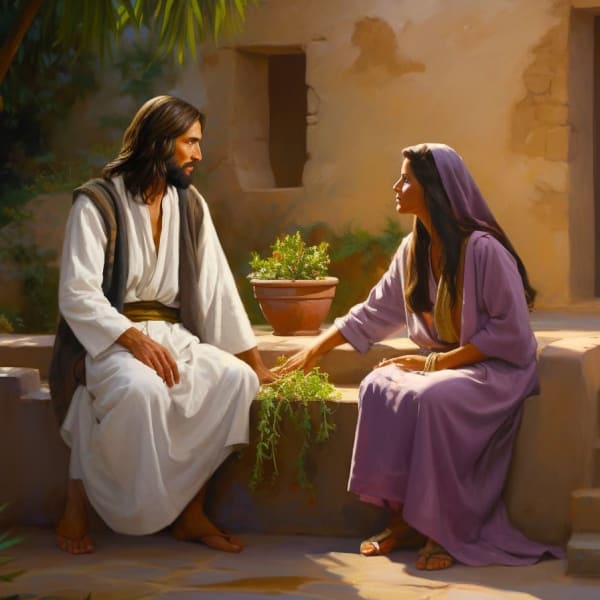
When Jesus and his apostles arrived at Jacob's well near Sychar, Jesus rested while the others went to get food and tents. A Samaritan woman named Nalda came to draw water, and Jesus asked her for a drink. She was surprised that a Jewish man would speak to a Samaritan woman.
Jesus offered her "living water" and revealed he knew about her troubled life, including that she was living with a man who wasn't her husband. Though startled, Nalda soon recognized Jesus was special and asked religious questions. When the apostles returned, they were shocked to see Jesus talking alone with this woman, who then went to tell her city about him.
-
6. The Samaritan Revival
The evening Nalda brought people from Sychar to meet Jesus, the apostles asked him to eat. Jesus replied, "I have meat to eat that you do not know about," explaining that doing God's will was his nourishment. He taught that the fields were ready for spiritual harvest.
Jesus and the apostles preached in Sychar for two days before camping on Mount Gerizim for the rest of August. Jesus taught the Samaritans that God is like a Father-friend and that love is the most important relationship in the universe. The work they did in these cities prepared the way for Philip's later successful ministry in Samaria.
-
7. Teachings About Prayer and Worship
During evening discussions on Mount Gerizim, Jesus taught many great truths about prayer and worship. He explained that true religion is the relationship between an individual and God, while organized religion is humans' attempt to make worship social.
Jesus taught that prayer is designed to make people more spiritually aware rather than more knowledgeable. Worship is meant to anticipate the better life ahead and reflect new spiritual meanings back onto current life. Prayer is self-reminding, while worship is self-forgetting and represents the soul's communion with the divine Father.