Discover The Urantia Book \Papers\Easy \The Passover at Jerusalem

Paper 142 Overview: The Passover at Jerusalem
During Passover, Jesus expanded his teaching, engaging with religious leaders and individuals. He clarified spiritual truths, challenged traditional authority, and emphasized the personal experience of faith over ritual practice.
Reading Level:
-
Summary
During April, Jesus and his apostles stayed in Jerusalem for the Passover festival. Jesus taught daily in the temple while the apostles spoke to the crowds outside. Many people heard the good news of the kingdom and took the message back to their hometowns around the world.
Jesus helped many people understand that God is a loving Father rather than an angry ruler. He taught that all sincere worship is accepted by God, and he explained how the Jewish idea of God had grown from primitive beginnings to a more loving concept.
-
Introduction
Jesus and the apostles worked in Jerusalem during April, going to Bethany each evening. Jesus sometimes stayed in Jerusalem at Flavius's home, a Greek Jew who welcomed him.
Jesus visited Annas, a former high priest, but Annas treated him coldly. Jesus told Annas that fear enslaves people and pride is a great weakness, then left without being invited back.
-
1. Teaching in the Temple
Jesus or one of his apostles taught in the temple every day during Passover. When the temple was too crowded, the apostles taught outside to the overflow crowds. Their message had four main points about the kingdom of heaven.
The Jewish leaders were worried about Jesus and his growing popularity. Many believers carried the news of Jesus back to their homes throughout the Roman Empire, which began spreading the gospel worldwide.
-
2. God's Wrath
A wealthy Jewish trader named Jacob met privately with Jesus. Jacob asked why Jesus taught about a kind and loving God when Moses and the prophets described God as jealous and wrathful.
Jesus explained that God hasn't changed, but human understanding of God has grown over time. He said that as children grow up, they understand their parents' discipline differently, and similarly humankind has grown in its understanding of God.
-
3. The Concept of God
The twelve apostles asked Jesus more questions about God that night. Jesus explained how the Jewish concept of God had evolved through history, from primitive tribal ideas to a more spiritual understanding.
Jesus traced this growth through six stages: from Yahweh of the Sinai clans, to the Most High taught by Melchizedek, to El Shaddai from Egypt, to the Trinity concept of Elohim, to the Universal Creator of Isaiah, and finally to the Father in heaven that Jesus was revealing.
-
4. Flavius and Greek Culture
Flavius, a Greek Jew who had not fully converted to Judaism, worried that Jesus might be upset by the art and statues in his home. Instead, Jesus showed interest in Flavius's collection and explained that appreciating beauty is not the same as idol worship.
Jesus taught that Moses's rules against images were needed in that time to fight idol worship, but now people could understand that art appreciation is different from worshiping idols. Flavius believed Jesus's teachings and was later baptized by John's disciples.
-
5. The Discourse on Assurance
In the temple, someone asked Jesus how they could know for certain he was sent by God. Jesus explained that just as human fathers don't keep their children in doubt about their love, God doesn't leave his children uncertain about their place in his kingdom.
Jesus taught that those who believe in him are truly God's children and have eternal life. The Spirit confirms this truth in our hearts, giving us confidence and removing all doubt.
-
6. The Visit with Nicodemus
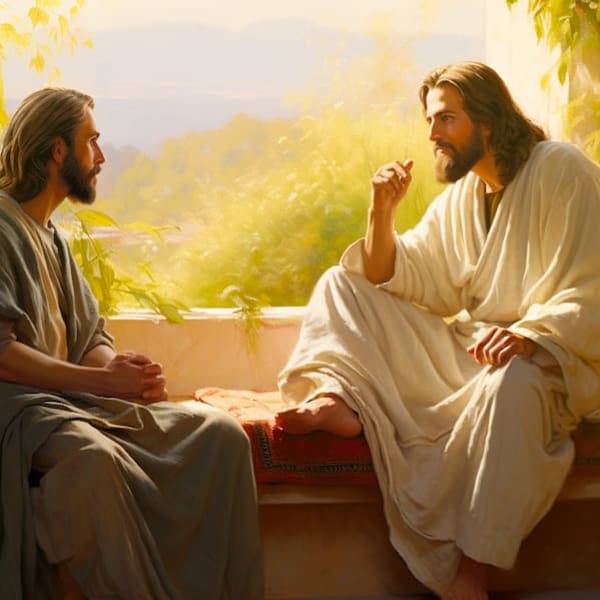
Nicodemus, a wealthy member of the Jewish council, came to see Jesus secretly at night. He respected Jesus as a teacher sent from God and wanted to know more about the kingdom.
Jesus told Nicodemus he must be "born from above" to see the kingdom. When Nicodemus was confused, Jesus explained that spiritual rebirth comes when a person submits their will to God's will, like a child follows a father.
-
7. The Lesson on the Family
Thomas asked Jesus what followers of the kingdom should teach about practical life issues like slavery, poverty, mercy, and justice. In response, Jesus taught for hours using the example of family relationships to illustrate spiritual truths.
Jesus listed seven facts about true family life, including security, education, discipline, companionship, love, and planning for the future. He then showed how these same principles apply to our relationship with God the Father.
-
8. In Southern Judea
By the end of April, opposition from religious leaders had grown so strong that Jesus and the apostles left Jerusalem. They spent May doing personal teaching in Bethlehem, Hebron, and surrounding villages instead of public preaching.
In June, they returned to the Jerusalem area but stayed in Gethsemane garden rather than entering the city often. Nicodemus and Joseph of Arimathea tried to visit Jesus once but were afraid to enter his camp. When a member of the Jewish council publicly supported Jesus, opposition grew again and they decided to leave for Samaria.
UB Reference
-
Read the full Urantia Book paper using this link:
Paper 142 - The Passover at Jerusalem