Discover The Urantia Book \Papers\Advanced \The Kingdom of Heaven

Paper 170 Overview: The Kingdom of Heaven
Jesus clarified that the kingdom of heaven is a spiritual reality within the believer. He rejected materialistic interpretations, emphasizing personal transformation, divine sonship, and spiritual fellowship with the Father.
Reading Level:
-
Summary
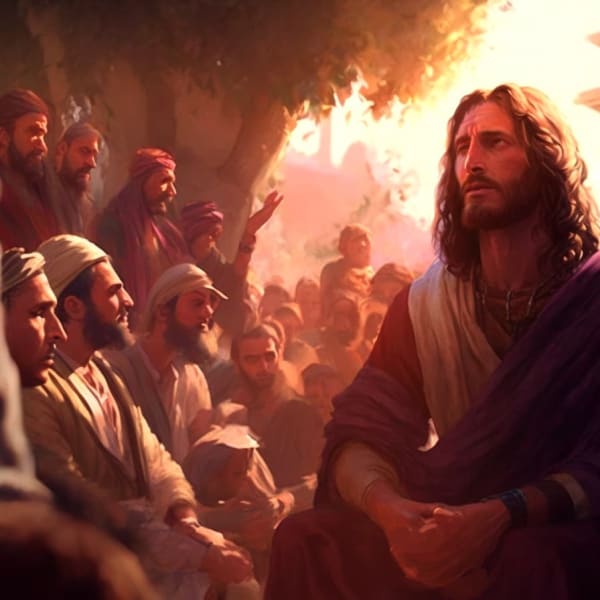
On Saturday, March 11, Jesus delivered his final sermon at Pella, a comprehensive exposition on the kingdom of heaven that stands as a definitive articulation of this central concept in his teachings. Recognizing the profound confusion among his apostles and disciples regarding the meaning of the terms "kingdom of heaven" and "kingdom of God," Jesus meticulously delineated the various interpretations of the kingdom, distinguishing between temporal and spiritual conceptions. He emphasized that the kingdom fundamentally represents a personal spiritual experience centered on the dual truth of God's fatherhood and human brotherhood, rather than a political or institutional establishment that his contemporaries expected.
The tragic irony of Jesus' ministry is illuminated as his original concept of the kingdom as a personal spiritual reality was gradually supplanted by the institutionalized church that emerged after his departure. While Jesus taught that the kingdom exists within the heart of each believer as a living manifestation of God's will through loving service to humankind, his followers progressively transformed this spiritual concept into a sociological organization and projected the fulfillment of the kingdom into a distant future. Despite this historical misappropriation, the essential spiritual truth of Jesus' kingdom teachings remains vital and will ultimately transcend the institutional structures that have temporarily obscured his original vision. Like a butterfly emerging from a cocoon, the true spiritual kingdom Jesus proclaimed will eventually manifest beyond the chrysalis of ecclesiastical organization that has enveloped it throughout the Christian era.
-
Introduction
On Saturday afternoon, March 11, Jesus delivered what would become his final sermon at Pella, a comprehensive discourse on the kingdom of heaven that stands as one of the most notable addresses of his public ministry. In this pivotal sermon, he undertook a thorough exploration of the kingdom concept, examining it from every conceivable perspective and endeavoring to explain the diverse meanings attributed to this term throughout his teaching career. Jesus was acutely aware of the profound confusion that persisted in the minds of his apostles and disciples concerning the terms "kingdom of heaven" and "kingdom of God," which he employed interchangeably to describe his bestowal mission.
The deeply entrenched Jewish expectation of a temporal king and political establishment presented a formidable obstacle to understanding Jesus' more spiritualized conception of the kingdom. Initially, Jesus had refrained from directly contradicting this long-nourished concept, recognizing that such deeply held cultural beliefs could not be summarily displaced in a single generation. This narrative not only recounts Jesus' sermon as delivered on that Sabbath afternoon but also incorporates numerous statements from previous occasions and includes remarks shared exclusively with the apostles during their evening discussions that same day. Additionally, the account offers commentary on the subsequent historical development of the kingdom concept and its complex relationship to the institutional Christian church that would later emerge from Jesus' teachings.
-
1. Concepts of the Kingdom of Heaven
Throughout the Hebrew scriptures, the prophetic tradition presented a dual conception of the kingdom of God: as a present reality manifested in righteous living, and as a future hope to be fully realized upon the Messiah's appearance. John the Baptist's proclamation of the kingdom primarily emphasized this latter aspect, heralding the imminent arrival of the Messiah who would establish God's sovereignty. Jesus and his apostles consistently taught both dimensions of the kingdom concept, acknowledging its present spiritual reality while affirming its future fulfillment. However, their teaching competed with two additional prominent conceptions: the later Jewish apocalyptic vision of a supernatural kingdom inaugurated through miraculous divine intervention, and the Persian eschatological doctrine portraying the kingdom as the ultimate triumph of cosmic good over evil forces at the world's end.
Prior to Jesus' advent, the Jews had synthesized these diverse kingdom concepts into an apocalyptic expectation of the Messiah's coming to establish Jewish ascendancy and God's eternal dominion on earth. By appropriating the terminology of the "kingdom of heaven," Jesus strategically incorporated the most vital and culminating heritage from both Jewish and Persian religious traditions. The historical understanding of the kingdom throughout subsequent Christian centuries has encompassed four distinct interpretational frameworks: the Jewish theocratic concept, the Persian cosmic dualism, Jesus' personal experiential concept of the kingdom within the believer, and the composite theological constructs developed by Christianity's founders and promulgators. Despite Jesus' consistent emphasis on the kingdom as a personal spiritual experience in relation to God and fellow humans, later interpretations frequently obscured this core teaching, resulting in centuries of confusion regarding the term's authentic significance.
-
2. Jesus' Concept of the Kingdom
Jesus unequivocally established that the kingdom of heaven must originate within and revolve around the dual conceptual foundation of God's fatherhood and the corresponding reality of human brotherhood. He affirmed that embracing these truths would liberate individuals from primordial fears while simultaneously enriching human existence through several transformative spiritual endowments. These included the acquisition of renewed courage and augmented spiritual power, the experience of unprecedented confidence and genuine consolation, the development of elevated moral values establishing a new ethical standard for human conduct, the prioritization of spiritual realities over material concerns, and the recognition that eternal realities constitute the ultimate reward for righteous earthly endeavors. This comprehensive kingdom teaching transcended the limited apocalyptic expectations prevalent in Jesus' time, expanding far beyond the elementary message proclaimed by John the Baptist.
The Master consistently attempted to translate the kingdom concept into the more practical ideal of doing God's will, earnestly endeavoring to persuade his followers to abandon the terminology of "kingdom of God" in favor of "the will of God." Though unsuccessful in this semantic shift, Jesus aspired to supplant the hierarchical paradigm of kingdom, king, and subjects with the more relational concept of a heavenly family comprised of the Father and his liberated children engaged in joyful, voluntary service to one another. Jesus articulated a nuanced conception of the kingdom's dual nature: first, as the supreme desire to fulfill God's will on earth, manifesting in enhanced ethical and moral conduct; and second, as the heavenly aspiration of believers, where divine love achieves perfection and God's will is accomplished with greater spiritual fidelity. Jesus taught that entrance into this kingdom requires simple faith expressed through childlike trust and sincere truth-hunger, the genuine desire for righteousness and communion with God.
-
3. In Relation to Righteousness
Jesus persistently endeavored to impress upon his apostles and disciples the necessity of cultivating, through faith, a righteousness that would transcend the ostentatious and legalistic righteousness exhibited by certain scribes and Pharisees. While emphasizing that simple childlike faith serves as the gateway to the kingdom, Jesus simultaneously taught that upon entering, believers must ascend progressive steps of righteousness to attain the full spiritual stature of mature divine sonship. The experiential reception of God's forgiveness within the kingdom operates through a definite sequential process involving four essential steps: forgiving others as a prerequisite for receiving divine forgiveness, loving one's neighbor with the same consideration given to oneself, embodying the highest ethical standards as an expression of this love, and ultimately manifesting true righteousness as the natural consequence of such all-encompassing love.
The authentic inner religion of the kingdom inevitably and progressively manifests itself through practical avenues of loving service, with ethical behavior emerging as the natural outcome rather than the foundation of spiritual experience. Jesus measured the righteousness of any action not by its external conformity to legal codes but by the underlying motive that inspired it, with the highest expressions of goodness being those performed unconsciously as spontaneous acts of spiritual love. The religion of the kingdom remains fundamentally personal and individual, yet invariably produces familial and social fruits consistent with the believer's transformed consciousness. By emphasizing the kingdom's internal nature within the individual believer, Jesus initiated a revolutionary social paradigm founded on spiritual righteousness rather than external reformation, anticipating not merely improved social and material conditions but rather the manifestation of enhanced spiritual values characteristic of advancing human relationships and evolving spiritual attainments.
-
4. Jesus' Teaching About the Kingdom
Throughout his ministry, Jesus deliberately avoided reducing the kingdom to a precise definition, preferring instead to illuminate different facets of this multidimensional reality according to the specific teaching context and the spiritual readiness of his audience. During his Sabbath afternoon discourse at Pella, he delineated no fewer than five distinct phases or epochs of the kingdom: the personal spiritual experience of individual believers in communion with God; the expanding fellowship of believers exhibiting transformed ethical and moral conduct; the transcendent brotherhood of invisible spiritual beings spanning heaven and earth; the prospective more perfect fulfillment of divine will manifesting in a transformed social order; and ultimately, the kingdom in its consummate expression during the future spiritual age of light and life on earth. This multifaceted understanding necessitates careful discernment when interpreting Jesus' various references to the kingdom throughout his teachings.
Jesus emphasized five cardinal features constituting the essential gospel of the kingdom: the affirmation of the individual's supreme value, the recognition of human will as the determining factor in spiritual experience, the reality of spiritual fellowship with God the Father, the transcendent satisfaction derived from loving service to humanity, and the fundamental superiority of spiritual values over material aspects of human personality. Despite the apparent historical failure to implement Jesus' dynamic kingdom ideals on a global scale, the Master counseled against discouragement regarding the kingdom's seemingly slow progress on Urantia. He emphasized the importance of establishing the kingdom within the individual soul rather than fixating on its external manifestation. Significantly, although Jesus referred to a future phase of the kingdom and on several occasions promised to return to earth, he never explicitly connected these two concepts. His apostles, however, readily amalgamated these distinct teachings, fostering the expectation of his imminent return to establish the kingdom in its fullness, an anticipation that has persisted among believers throughout subsequent generations.
-
5. Later Ideas of the Kingdom
During the initial centuries of Christian expansion, the concept of the kingdom of heaven was profoundly influenced by prevalent Greek idealism, which conceptualized the physical realm as merely a shadow or temporal reflection of eternal spiritual realities. A pivotal transformation occurred when the Messiah of the kingdom became reinterpreted as the Redeemer of the church—a religious and social organization that developed through Paul's ministry and incorporated Jesus' teachings supplemented by Philonic philosophy and Persian dualistic doctrines of cosmic good and evil. Jesus' original kingdom concept faced near obliteration through two divergent but equally distortive tendencies: Jewish believers persisted in regarding him as the Messiah who would soon return to establish a world-wide material kingdom, while gentile converts increasingly embraced Paul's theological framework casting Jesus as the Redeemer of the institutional church rather than the proclaimer of a spiritual brotherhood.
The emergence of the church as a social outgrowth of the kingdom represented a natural and potentially beneficial development; however, the fundamental error lay not in the church's existence but in its virtual supplantation of Jesus' spiritual kingdom concept. Paul's institutionalized church effectively became a substitute for the kingdom of heaven that Jesus had proclaimed, transforming a dynamic spiritual brotherhood into a formalized religious organization. While Jesus had anticipated certain social consequences from his teachings, he intended these to emerge as natural, unconscious manifestations of authentic spiritual experience rather than as deliberate institutional constructs. Though Jesus' ideal kingdom concept largely failed to materialize historically, his spiritual teachings provided the foundation for a progressive human society that, despite its institutional limitations, preserved elements of his message. The paper concludes with the affirmation that the seemingly thwarted kingdom concept remains dormant within the ecclesiastical cocoon of the Christian church, awaiting its eventual emergence in a more spiritually receptive age, much as a butterfly ultimately transcends its chrysalis through the natural process of metamorphic development.